

Backstreets Buoy
We wander Paris's tiniest passageways, find the smallest house, the shortest street, and a novel Eiffel Tower souvenir. Also, a palliative care meltdown, the worst crèperie in Paris, and a podcast.

I must start with an apology. This was all ready to go yesterday, but a dramatic upswing in pain accompanied by vomiting has disabled me. Forgive me.
On days I need a break from work and don’t have nurses, medical appointments, or plans with friends, I announce to Tim that I need an excursion. Excursions inspire new perspectives, new thoughts. I need the collisions with other humans or art or trees.
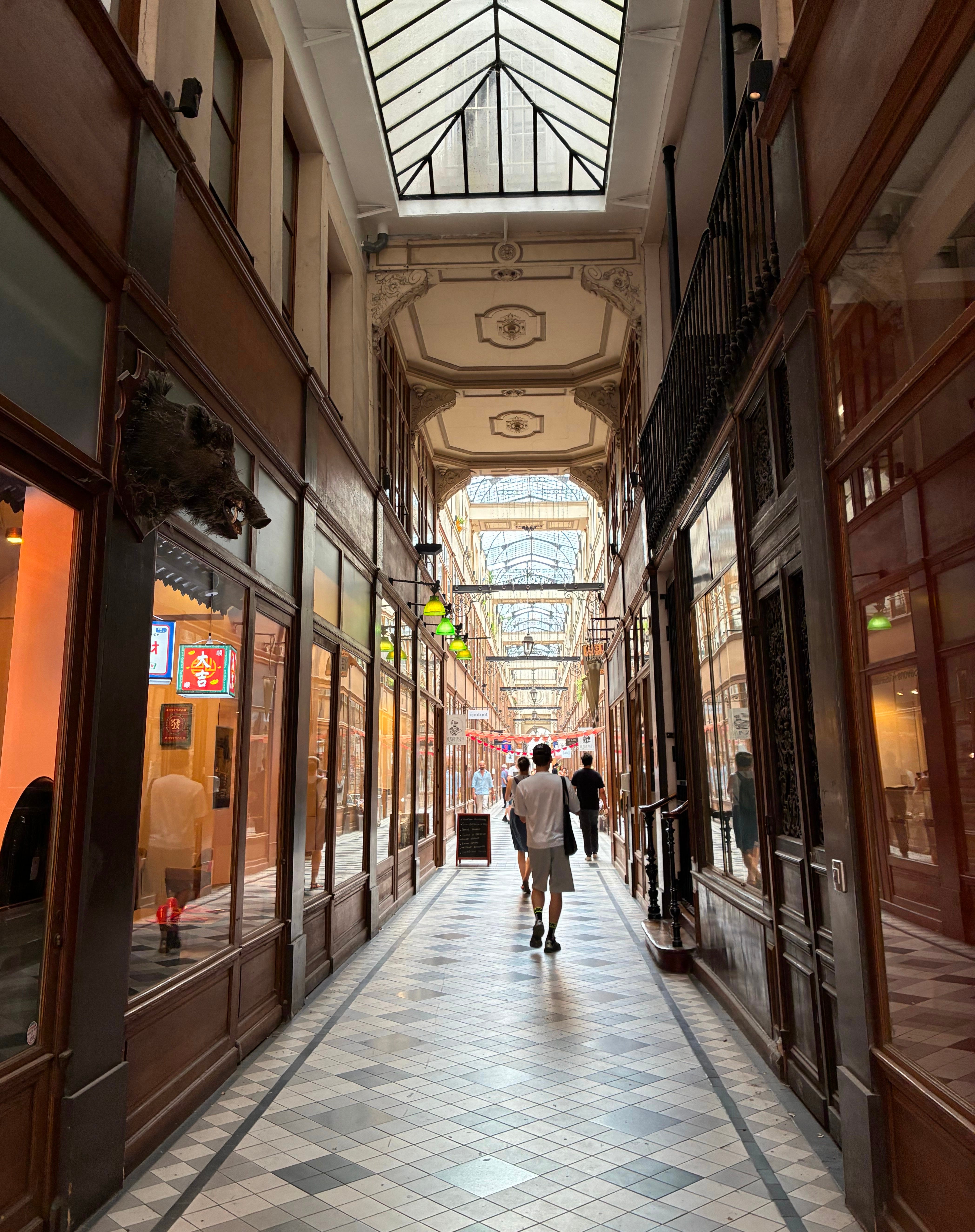
We live in a great city for excursions. This week, Tim found us a long walk exploring Paris’s tiniest passages, those liminal spaces tucked among the wide boulevards. Following an actual paper map, we wandered from Chateau d’Eau through the tenth and second arrondissements, zigzagging our way down.
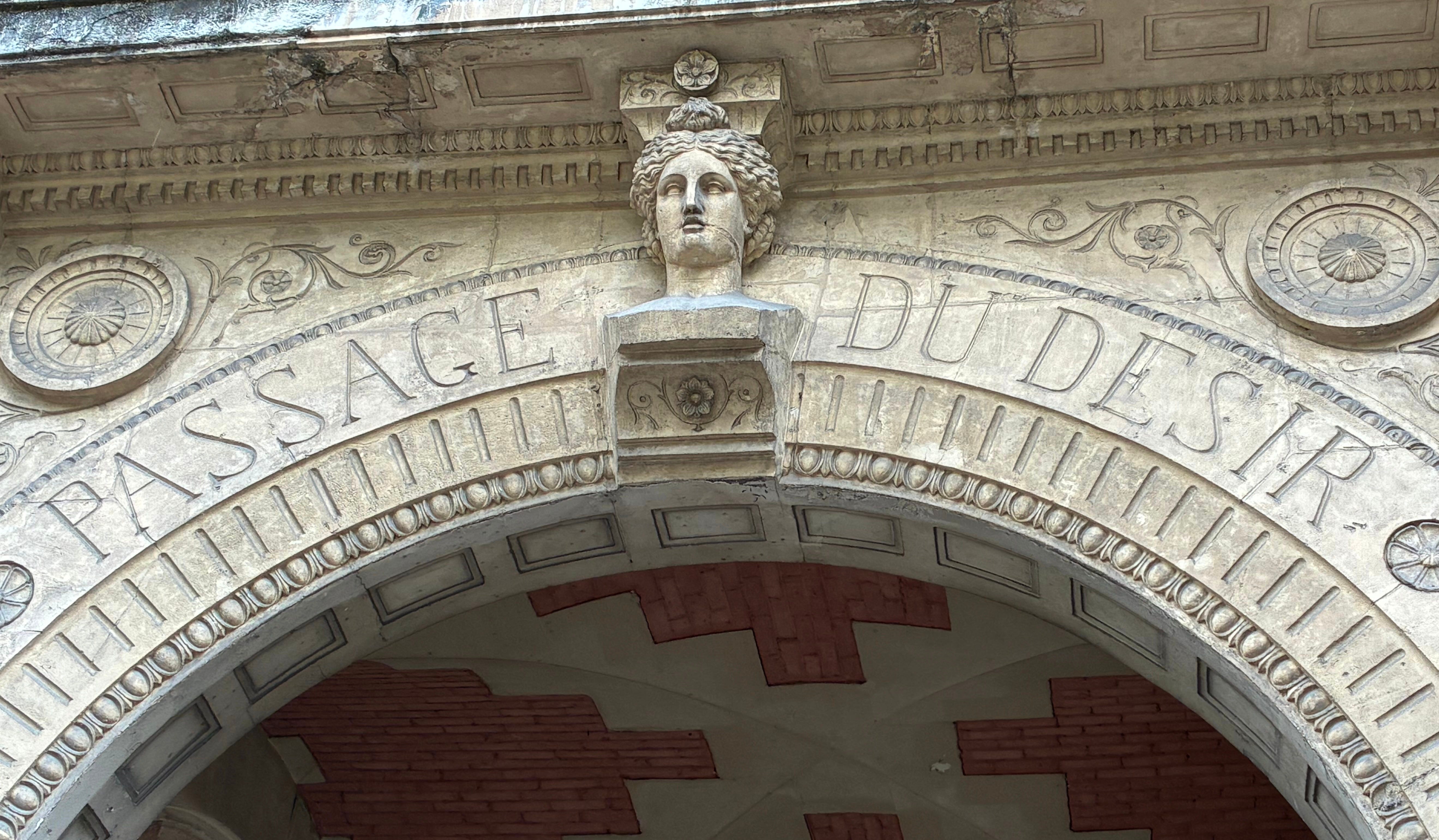
We began with the Passage du Desir, a brief passageway that was once open to pedestrians but now, we discovered, is barred. (It is also, I discovered when looking up details about this passageway online, the name of a shop dedicated to ethically sourced sex toys). It was originally called the Passage du Puits, but residents changed its name to the Passage du Desir in 1789. Later, it was split into two by the Boulevard de Strasbourg. We peered through the grills of both sections, searching for a hint of its past, but it was mute. Any shops that once lined it are closed. Any prostitutes who once wandered it are gone.
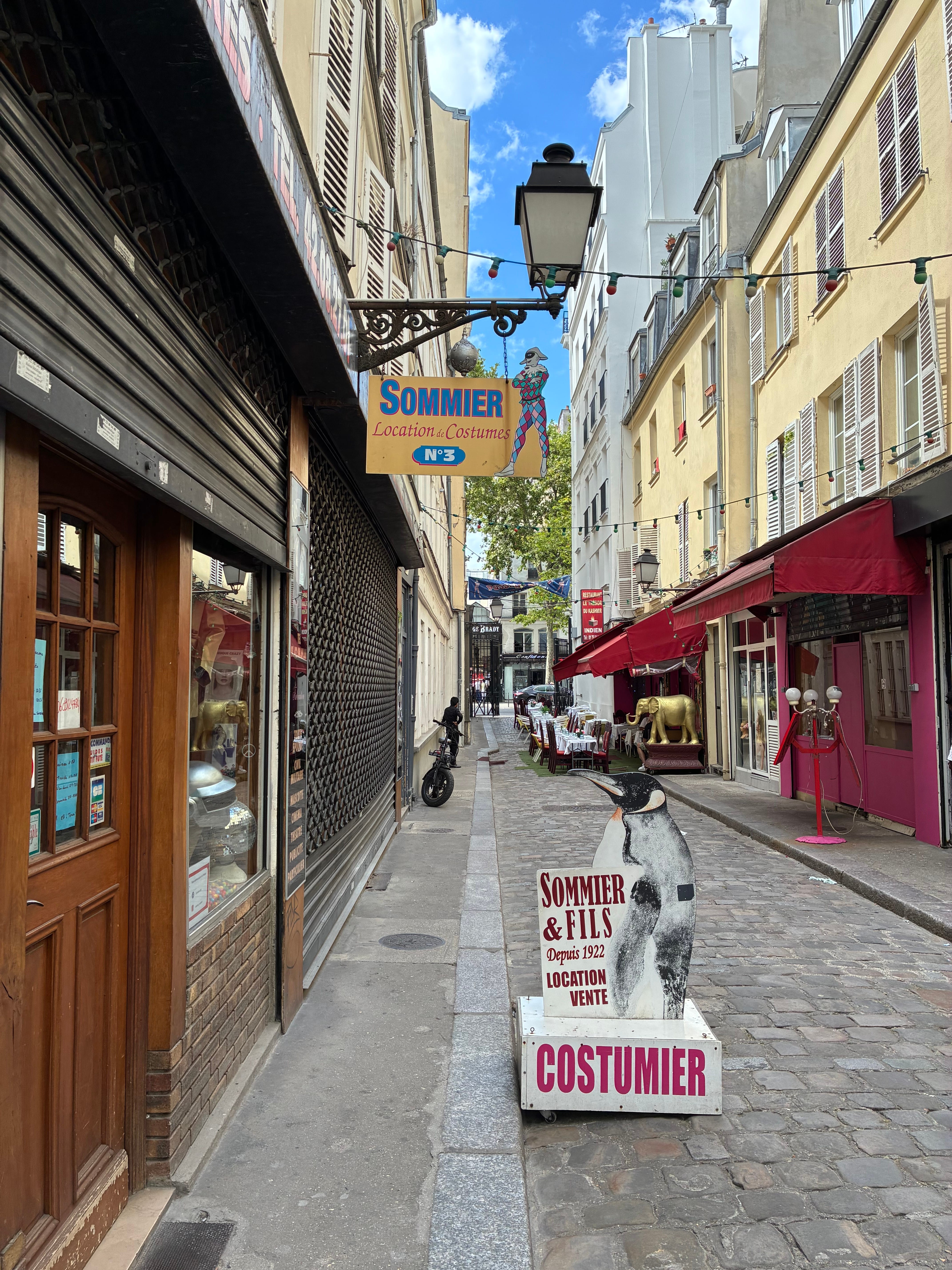
It was thankfully the only passageway barred to us. We explored many others, including an alley lined with pretty Indian and Pakistani restaurants, their outdoor tables teetering on the cobblestones, and a large costume shop. We slipped through the graffitied Passage de l’industrie. Between passageways, we found the Théâtre Antoine, where Peter Brook once directed A View from the Bridge. The poster is still up.
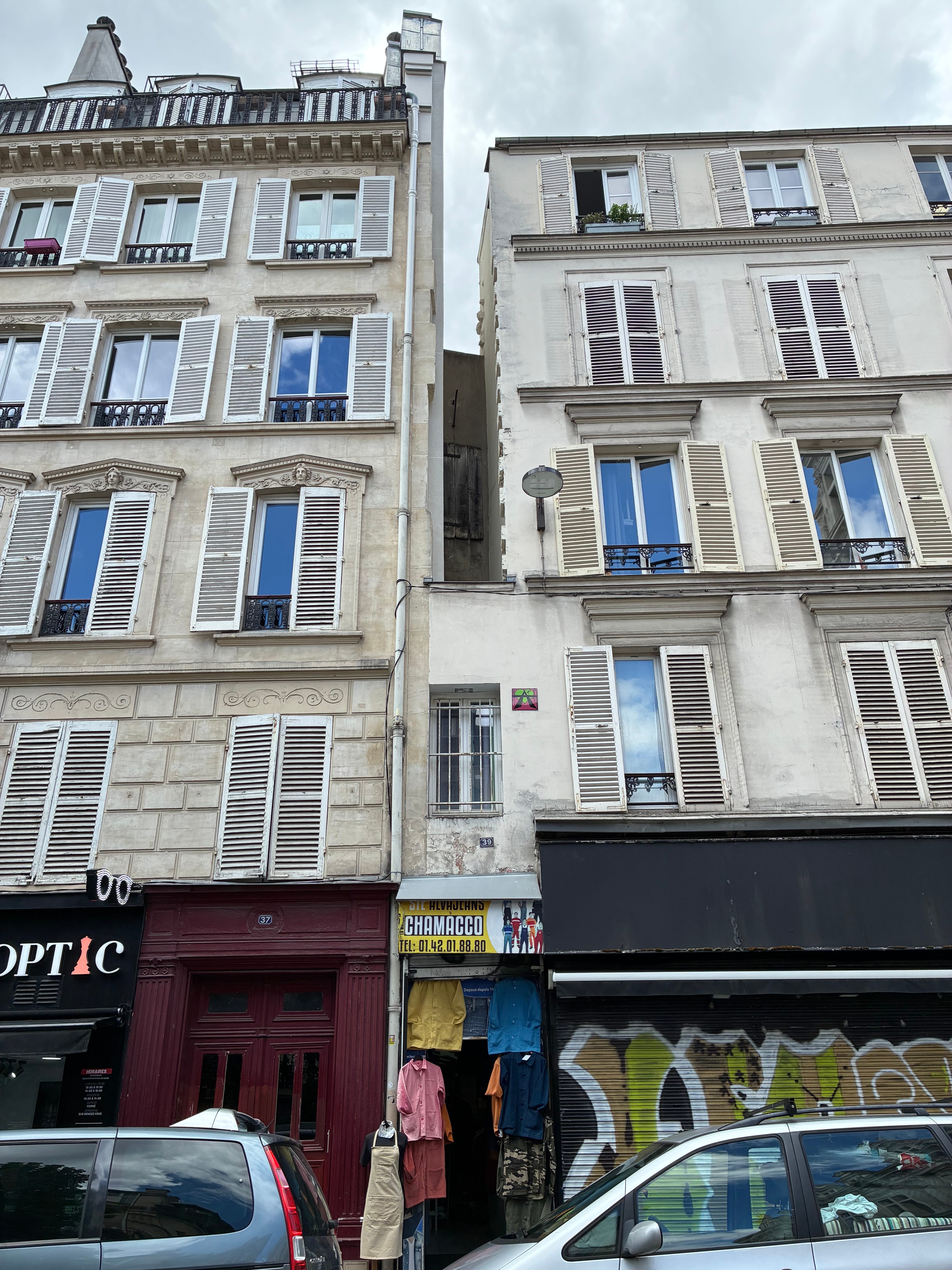
We saw Paris’s smallest house (at 39 rue du Château-d’Eau) and its shortest street, Rue des Degrés. It’s a staircase more than a street, but I’m not going to quibble. We also strolled streets lined with working girls, standing several meters apart as they waited for customers. Many were older than I am. Some wore handcuffs clipped to their waists.
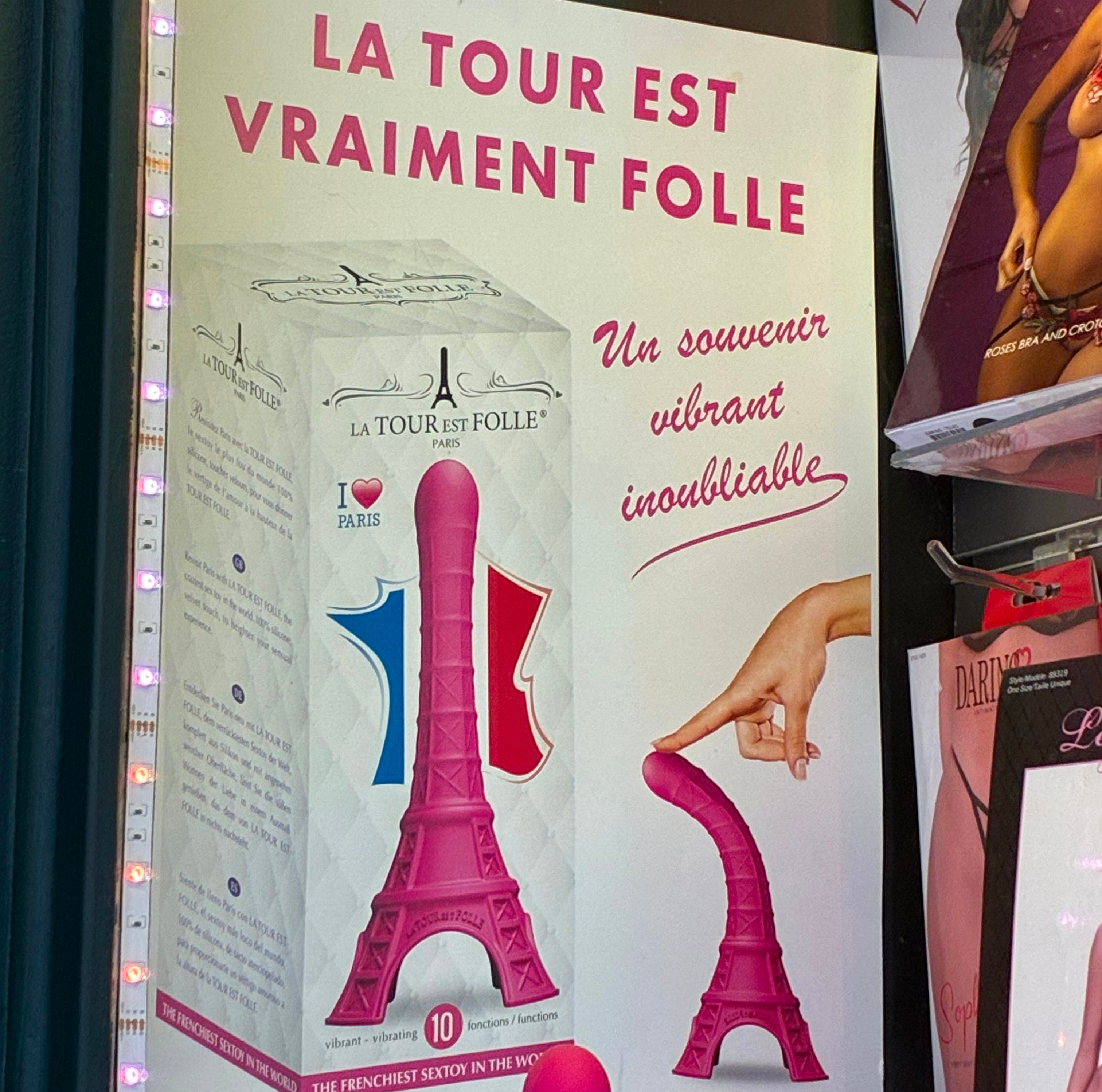
We discovered many adorable coffeeshops, vegetarian restaurants, wig shops, tattoo artists, and a shop featuring a prominent display of Eiffel Tower vibrators. (For those who like their souvenirs of Paris to take them to even greater heights).
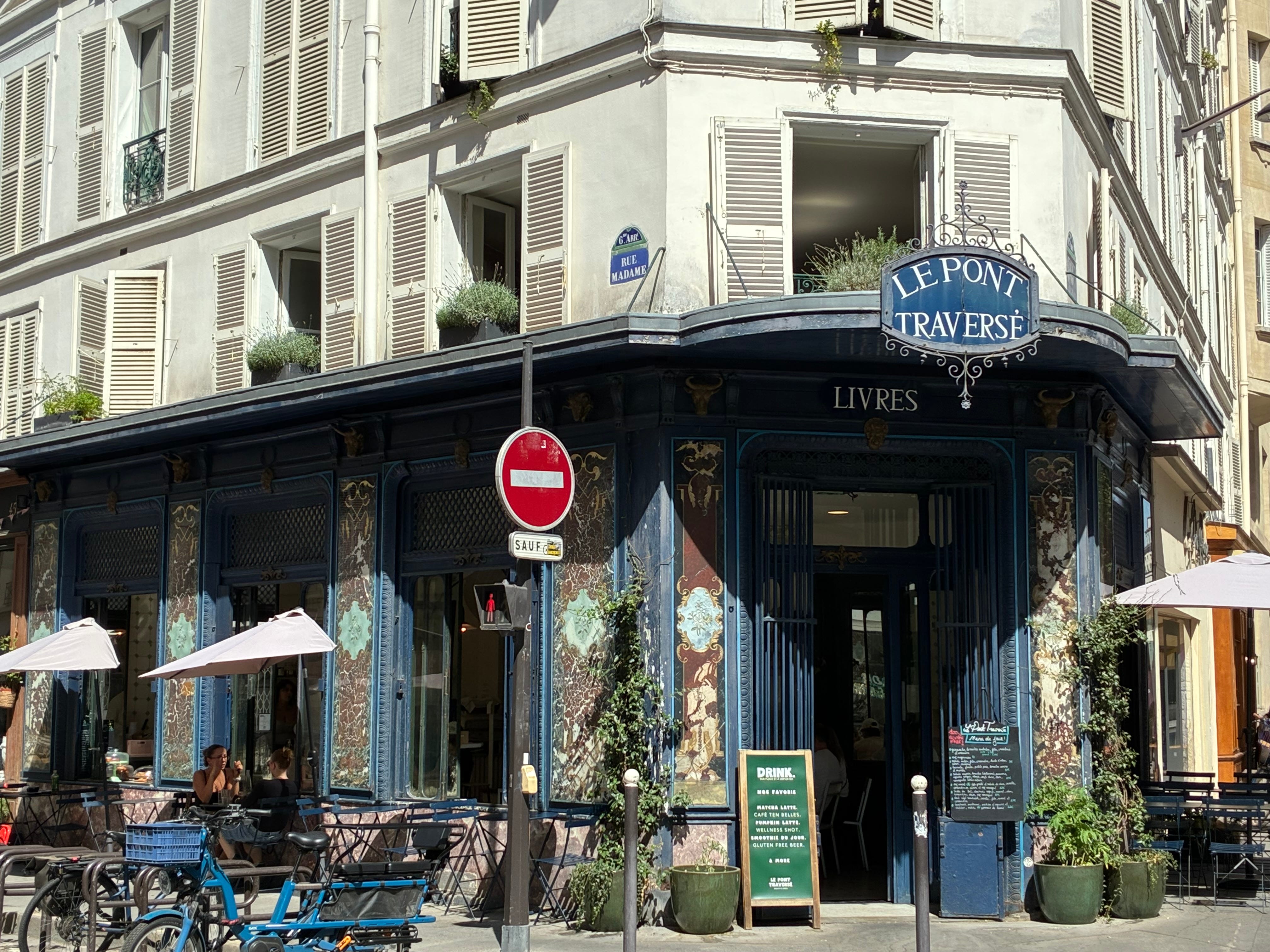
Yesterday we began another walk, wandering past the homes of famous writers and old bookstores. This was how we discovered Paris’s longest street, the Rue de Vaugirard, which runs 4.3 km between 6th and 15th arrondissements. But we had only been walking for an hour when I suddenly couldn’t take another step. A total exhaustion overcame me. Tim found a charismatic and gluten-free coffeeshop, Le Pont Traversé, to see if green juice and coffee could revive me. Yet I remained unequal to reentering the hot streets. “Why don’t I take you to the bookstore and leave you there for awhile?” Tim said. “We can finish the walk another time.” He knows the Red Wheelbarrow is the best medicine.
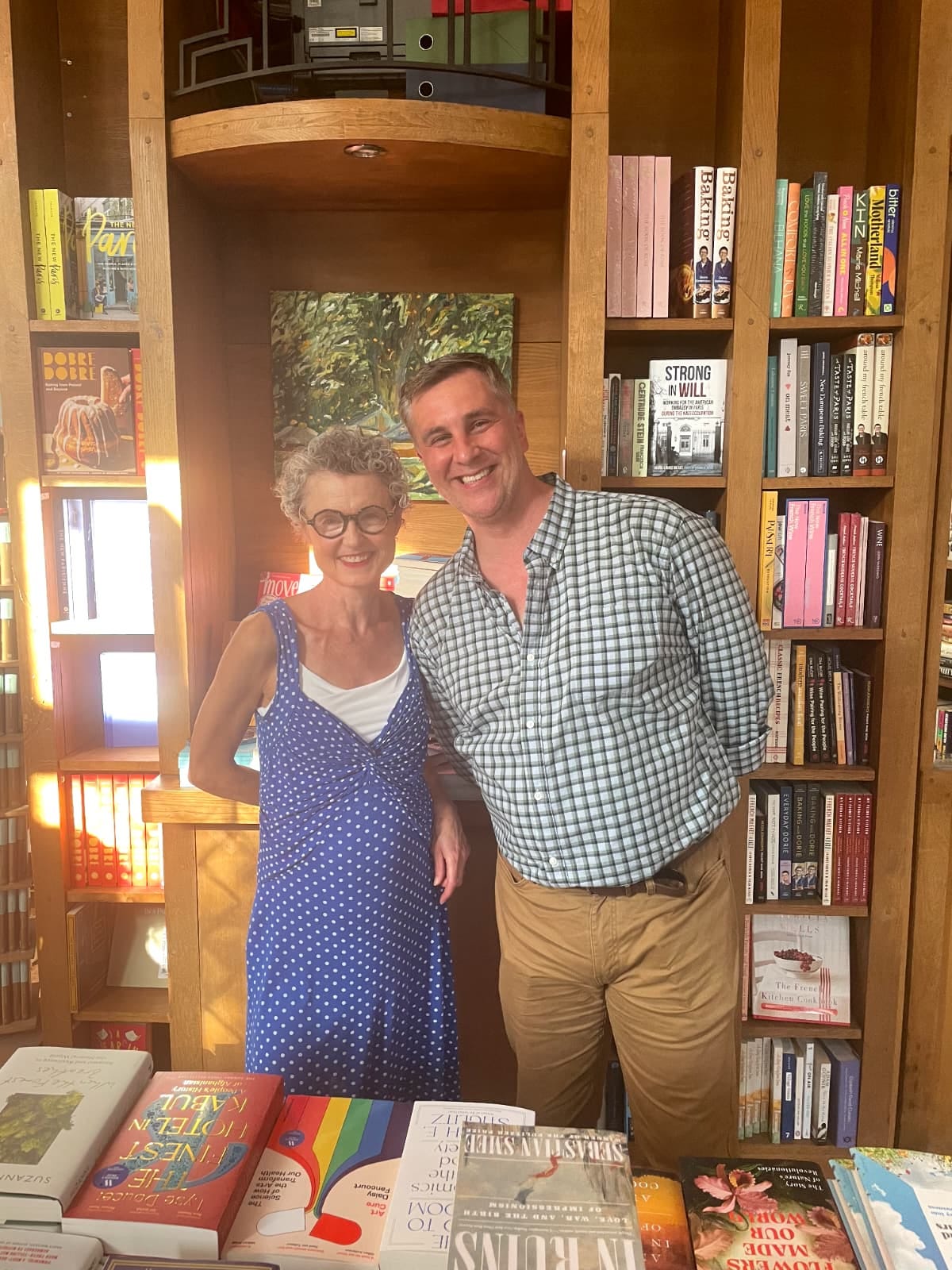
And it was. I was so happy to see Penelope, who has been on holiday in Canada for two weeks. I loitered until closing, chatting with customers and signing some stock. As I was about to leave, two men walked into the bookstore. One of them stared at me. “We know each other,” he said. “How do we know each other?” We ran through our colleges and home cities for a minute before he said, “I know! I met you at Jeni and Daniel’s wedding in New Orleans!”
This was more than a decade ago. I was amazed he recognized me, particularly given the dramatic changes in my appearance. It all came back to me, the wedding, our friends in common. We talked and talked about writing, books, and publishing. He and his friend, both professors at Centenary College in Louisiana, have traveled to Paris with a group of their students. More Red Wheelbarrow magic.
Magical thinking is a part of every day. I still choose foods I think will cure me. I still work hard to maintain muscle mass. I still make new friends. Maybe I am trying to make sure that as many people remember me as possible. I don’t want to be forgotten.
I was just asked to be a guest writer at a writing workshop in Paris next summer. When I explained my situation, the writer who runs the program said he still wanted me to do it, on the off chance I am still alive. I am grateful for his magical optimism.
As we left our meeting with the palliative care people this week, Tim said, “well, that wasn’t your finest hour.” True. Sometimes I find myself resisting the care these people want to offer me. There is something about their relentless niceness, their patience with me, their pity, that underscores the fact that I am not expected to be around long. They want to keep loading me up with more drugs each time. As if opiates are the only choice I have. I resist this every time. I cave every time.
I find myself sitting there thinking, fuck the pain, I don’t care about the pain. Cure the cancer. It’s just so depressing to sit with very nice intentionally gentle people talking about easing your pain and not the real problem. Because the real problem is unsolvable. I understand this is not a useful line of thinking. It turns me into a recalcitrant child.
But it turns out one doesn’t necessarily get wiser and wiser as one approaches death. There are moments of pragmatic acceptance—the time I spend on death admin—followed by moments of such grief at the thought of leaving my family that I want to pound my little fists into the floor and scream “but I don’t want to die! I just won’t die! You can’t make me!” Accepting my imminent death feels like an insult to life.
So I sat in palliative care with tears streaming down my face telling them I didn’t care about the fucking pain. And they nodded with relentless sympathy. And wrote me a prescription for more painkillers.
I felt flattened. We walked to the American Library to return books, which inevitably led to taking out more books, although I have yet to finish all the books scattered across our bedroom floor. I was hungry, not having eaten all day, so we stopped at the worst crèpe place in Paris. To save you from ever making this mistake, I will tell you it was called Crep’ and Tea. It is a hole in the wall with sticky vinyl seats and the world’s surliest propriétaire. It was also completely empty at lunch time, which should have been a sign. I ordered a salade nicoise, wanting vegetables and protein. Our grumpy host slung in front of me a plate of pale, limp lettuce covered with canned green beans, a few tiny flecks of tuna, and a fried egg, all soaked in dressing. It was the most revolting thing I have ever tried to eat and I could not finish it. This small thing kept my mood on a downward spiral. I wanted to scream at the man, “I have very few meals left, we never go out to eat, and the one time we do, you ruin it!”
Are you tired of me dying? I am. I’ve been doing it for many years now, and I worry that at some point you’re going to start thinking, when will she just die already so we can get on with proper mourning and recovery? Why drag this whole thing out? And I often have the same question, to the point that I no longer worry about things that would kill me suddenly, like a heart attack or murder. At least it would all be over fast, no prolonged suffering. But as long as I can still take pleasure in things, as long as I still feel a sense of euphoria every time I pick up a book or see a friend or listen to my daughter or walk with my husband, it’s worth the pain and all the doctors’ appointments and nurse visits and bulging midsection and drain. At some point, the pain and exhaustion will eliminate all the joy. And then, I can only suppose, I will be ready.
In the evening, still searching for something to cheer us up, we watched Papadopoulos & Sons, an unimaginative, predictable film with a sentimental heart. I immediately turn against any film or television show about a family in which the son is a math and computer genius and his older sister is a vapid, superficial twit. It’s such a tired trope. The daughter in this film is the least interesting character, caring only about clothing and makeup, not interested in education or a career. Whereas her brothers had interesting passions, the elder being passionate about plants and growing things, the younger being a math genius. I wish the film industry could write daughters who were fully realized, unique humans.
As always, others tether me to the present. Their physical presence before me, their faces, their words. When alone, my thoughts fly off into a thousand terrifying places. With others, I can focus on them and their lives, which is far more enjoyable. My friend and force of nature Natasha brought us dinner one evening, and we had a happy time eating her Puerto Rican black beans and listening to her stories.
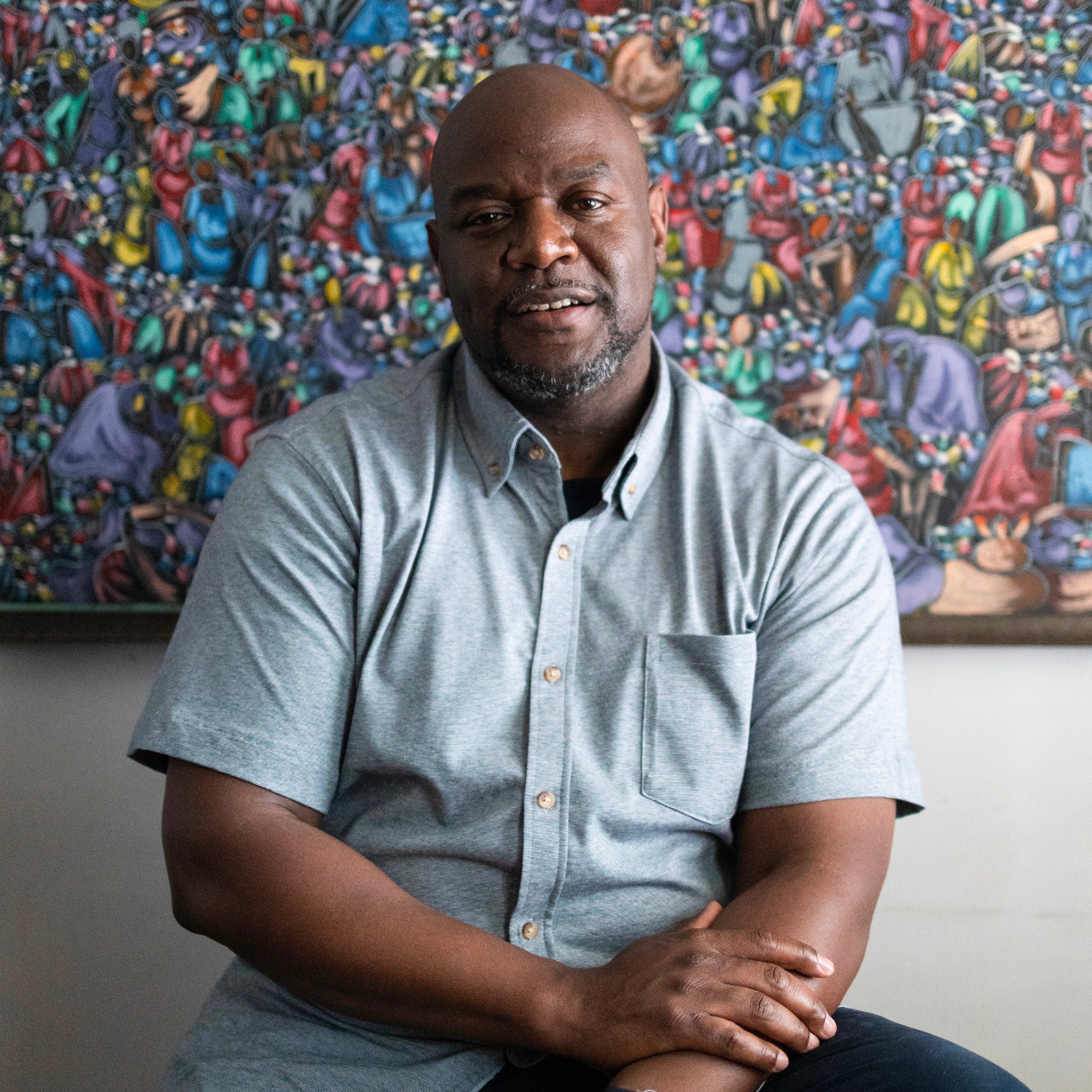
I’ve also had the great privilege of being interviewed by poet and professor Enzo Silon Surin for his podcast A Poetic Life with Enzo the Poet. Look for it wherever you get your podcasts. I love how thoughtful and unrushed his conversations are. Enzo is not afraid of silence, not afraid to wait until his guest has found the right words. This is a rarity in the podcasting world, where so often everyone is talking over each other and vying to be heard, trying to be funnier than anyone else.
Neither Enzo nor I can remember how we met. It’s the strangest thing. We’ve never met in person, and we first connected during the initial years of the pandemic, but we cannot remember how or why. I remember leaving voicemails for Enzo while walking through parks in Tashkent. I remember a strong sense of what a good parent he is to his two sons. How this all began escapes both of us. But he is a magical presence in my life.
Here is a link to his Substack, It’s a Poetic Life w/ Enzo the Poet. I will let you know when our episode airs!
One night Tim and I watched One Battle After Another, which bored me senseless. Too much violence, too many car chases. It’s not funny enough to be satire. Not smart enough to be interesting. Mostly I just felt repelled. When I see a woman declaring “this is what power looks like” while waving a rifle, it makes me want to say, “but this is what power has always looked like. Guns. Violence. Threats. You’re just imitating what white men have always done. Can’t we do better?” I want to think that women would create a different kind of revolution, a different form of resistance. Something with a lot more imagination. Street theatre, the power of words and spectacle. Something to shock our minds into changing. Waving a gun is never going to lead to a better world. No matter who is doing the waving or how noble their intentions. I want something new, not how men have always run their revolutions. The whole film felt like a massive failure of imagination.
Nonviolent protest is one thing I explore in the novel I wrote for my doctorate, The Underside, which comes out with Regal House in 2028. Based on an actual community of LGBTQ people who live in caves in Bolivia after having been expelled by their families, the book tells the story of a group of queer women who find sanctuary in old mining tunnels beneath La Paz. I wanted my female characters to imagine a different kind of underground resistance, a different way to rise up. A way to advocate for themselves. A resistance grounded in creativity and art. They may not succeed initially, but it’s a start. They have begun to find new and stunning ways to communicate with the world, to make their voices heard.
The art of persuasion does not require weapons.
Sunday, the show Theo wrote and directed was performed for her entire summer camp, Stagedoor Manor. I had been so desperate to see her show that I asked my team if I could possibly go to the US for a few days and one doctor wrote back to say that I’d need to be on anticoagulants to travel, find a private nurse in NYC, and that overall he discouraged the idea. So that was that.
Theo rang us after the performance, high on its success. She loved her actors, who apparently did a brilliant job. It was wonderful to see her so happy. She was glowing. I’m so grateful to the friends who made this summer’s adventures possible for her. To see her thriving means everything.
As long as I am here, you will not be forgotten. At least as long as I am here and have my faculties. Also, a different thought: memorable as you are, I doubt this is the only plane on which you are known and celebrated.
❤️ ❤️ ❤️ thanks for your beautiful words and soul.