

Waters within and without
We find the village pool, but Tim’s swimsuit offends the French

This weekend we finally discovered our local pool. We have never been there before. I am furious with myself for not having gotten there before. I am having a drain installed today, which will keep me from swimming for as long as I have it. I had thought joining the pool might be complicated or expensive. But I was wrong. And what a beautiful pool complex! It consists of four swimming pools. One for the smallest kids, a larger one for families, a large pool for lap swimmers, and an outdoor pool for lap swimmers. I only had two days left to swim before the drain and I wanted to make the most of them.
There was one complication with getting in, at least for Tim. After we had paid our three euros, found lockers, and showered, we were walking into the pool deck when a guard stopped us. “You can’t wear that into the pool,” he said to Tim. Tim was wearing ordinary swim trunks. We were baffled. “Why not?”
“You need to be wearing something made from that material,” he said, gesturing to my black one-piece, and then to a passing man in clinging lycra.
“But this is a bathing suit. Made from material suitable for swimming,” we argued. “What is wrong with it?”
“It’s just the rules.” The most French answer. He could not explain to us why Tim’s swimsuit was not acceptable. Denying Tim entrance in a perfectly respectable suit seemed cruel, given that we’re in the middle of a heatwave and Tim is 68 years old and needs to cool down and get exercise.
So Tim didn’t swim with me, but spent an hour chatting with the security guard at the entrance. By the time I emerged they were best friends. I felt terrible that he hadn’t gotten to swim, but he had insisted I go without him.
Despite the heat wave there was only one other person in my lane, so it was blissful. I had expected the pool to be heaving with swimmers. I swam laps for nearly an hour. It made me feel so much like myself. Like I had my body back. The moment I am underwater my anxiety falls away. Instant therapy. It has always been thus.
On Sunday we both swam. Tim bought a cheap, tight little lycra swimsuit at the Monoprix near us so that he could make it past the pool swimsuit censors. I couldn’t identify him underwater as every man seemed to be wearing the same suit. Again, I swam for an hour, the whole time aware that it could very well be my last swim. I don’t like that I am thinking of so many things like that, thinking, this could be the last time I see this friend, the last time I do this activity. All the last times. They oppress me.
I have always been a creature of the water. I learned how to swim at a local pond almost as soon as I learned to walk, and was taking lifesaving classes by the age of 13. I grew up swimming in lakes and ponds rather than pools. Pools were for playing with friends but not for real swimming. When we were at our home in Vermont, I loved to swim all the way across the nearby Ticklenaked Pond. I wasn’t particularly speedy, but I could swim forever.
On hot summer nights, my mother would pile my sister and me and our friends into our car to drive down to Ticklenaked, where we would swim naked under the stars. One foggy night she accidentally drove the car into a cornfield on the way home and we panicked that the police would find us all naked in the car. But she managed to maneuver the car out without damage to anything but the corn.
As an adult, I became a runner. For many years, I was happiest when running through the snow in Montana or around Central Park. It was the only time my brain was free to wander, not tethered to a book or a conversation. I came up with many of my story ideas while running. When injuries forced me to stop running after I finished the 1996 New York Marathon, I turned back to the water.
When I lived in New York City, I swam every day. I briefly swam in a tiny pool at the Paris Health Club on the Upper West Side, because it was close to my apartment on 106th Street. I then swam at a gorgeous pool in midtown for many years, making lifelong friends there. Sometimes I swam at the Olympic-sized public pool up on 181st Street near the Hudson. I swam in a little pool in the basement of a school on the Upper West Side, where I was coached by legendary triathlete and deep water running guru Doug Stern. In my last years in New York, I swam at the Harlem YMCA, where I almost always had the pool to myself. All these laps kept me sane and strong.
“How do you find time to swim every day?” my boss at The Week once asked me. “I’m too busy for exercise.”
“Because for me it’s not optional,” I answered.
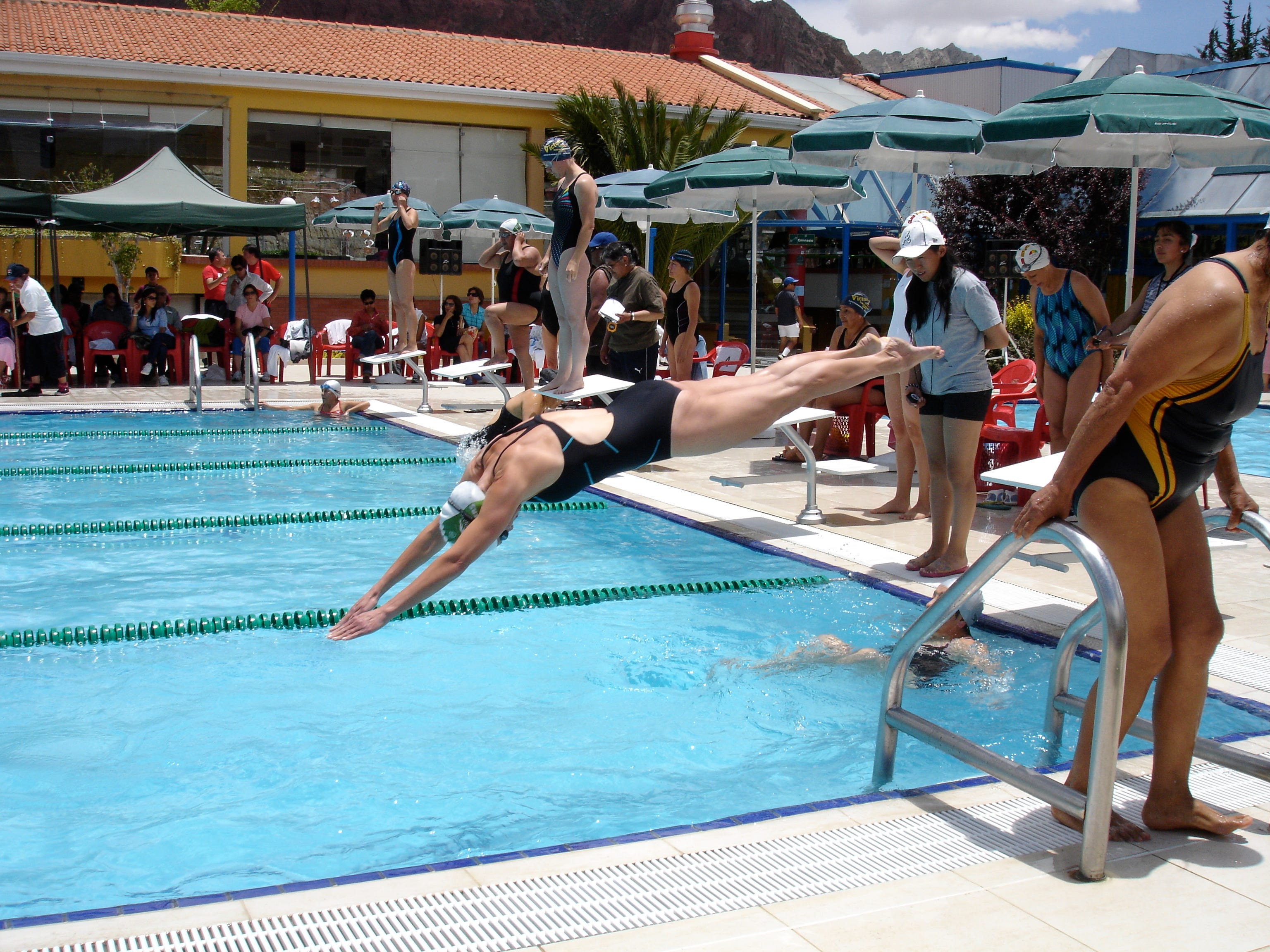
When I moved to Yemen, I swam every morning at the Sheraton’s pool under Yemen’s relentlessly clear blue skies. After we were evacuated, I swam at a local pool in Amman. When we moved to London the first thing I did was join a pool. In Bolivia, I joined a local swim team and competed with them. It was the toughest training I have ever had, not least because the pool is at nearly 12,000 feet of altitude. Our coach wrote me training programs on little sticky notes that he stuck to the side of the pool in my lane; I still have them somewhere. It always took me at least an hour and a half to complete the drills. It was a vast pool, with a spectacular view of the Andes.
I did not swim in Uzbekistan because we could not find a swimming pool we could afford. Swimming pools in Tashkent are insanely expensive, so expensive that we concluded they must be laundering money, because who but billionaires could afford their prices? I visited one glorious health center there with a beautiful, empty pool. I pined. While there was a pool outside our house, it was only filled during July and August, when we were usually not there. Most of the time I had to content myself with ballet, yoga, and walking. C’est la vie.
A few hours later
Now, I have a drain in my abdomen and swimming is over.
Despite having gone through the surgical procedure twice before, I was nervous. But the second I was lying flat on the table, my whole body relaxed. It’s funny, the moment I hand my body over to someone else, I go zenlike. The surgeon managed to install the drain with minimal pain and the nurses were gentle and kind. While ascites drained out of me, everyone became very anxious about the fact that visiting nurses have not yet been organized for this week. The conversation about this was fraught and urgent, but I struggled to follow their French. I didn’t understand what they wanted me to do about the nurses and my lack of comprehension made me feel stupid and frustrated. Tears started up, and then I was crying about everything while the nurses patted me. Mortifying. “If tears come up into your eyes, you must let them out,” one of the nurses said.
I have so much support, medically and socially, yet I still feel terrified most of the time. Maybe I just have to make myself comfortable in the terror. Is such a thing possible?
There are things that reliably distract me from my fears. I am always okay when I am reading. I am okay when I am talking with my daughter. I am okay in water. I’m okay taking a ballet class (but not when doing yoga, as it has become so painful it ends up stressing me out). I am usually okay with friends. I haven’t seen any recently as I think we’re all too daunted by the heat to venture out. And so many people are on vacation.
Besides, the past week has been packed with scans, blood tests, a puncture, a followup with the toxicity doctors, and work. At home I have continued to go through my journals and copy parts relating to Theo into a document for her, so she can read about herself as a little girl. I am only in our first year in Bolivia, so there is a long way to go. But I think it’s most important I share with her the things she does not remember. The things that happened when she was tiny.
I got to speak with her several times on Saturday, as she wanted help editing two plays she was writing. I treasure these conversations. She is having the most incredible time exploring colleges; it makes us so happy to hear about her adventures.
I’d like to wrap up with some special insight into the human condition, especially the condition of humans walking the tightrope between life and death. But all I can say is that sometimes you just have to narrow your focus to what is front of you and the next okay thing.
Book Notes
The Power
Naomi Alderman
I’ve been hearing about this book for many years. The novel imagines what would happen if women had the power to electrocute people with just a touch of their hands. I’ve heard it talked of as a feminist book, as revolutionary. But I found the opposite to be true. No sooner do women gain a bit of power, they start using it just like men have, including raping men. This deeply disturbed me. I do not think that the reason women do not commit rape is the technical difficulty. I think the reason women do not commit rape is because they have no desire to do so. With some criminal and mentally ill exceptions, it’s just not in us. I do not believe that women would do the things Alderman imagines they would do, go on violent rampages just like men have always done. I found nothing inspiring about any of the women or men of the book, who acted out the worst impulses of humanity. It just filled me with despair. I would have loved to see what women might create that would be different from the disastrous world men have created. I am not saying it would necessarily be a utopia, but I do not think it would be the same. Ultimately this book is a failure of the imagination; Alderman cannot imagine how women might use power to transform the world we’ve always had into an entirely new reality.
Backtalker
Kimberlé Crenshaw
I fell in love with Crenshaw in the first pages of the book, when she was a little girl with an instinctive sense of justice and a habit of talking back to authority. I also fell in love with her mother, an extraordinary woman. Crenshaw writes lucidly about how her experiences as a Black girl in the US led her to her ideas about race and gender. It’s not an academic book; it’s personal. She includes fascinating stories behind Anita Hill’s testimony in the Clarence Thomas confirmation hearings and the #sayhername movement. I was also interested in her critiques of Obama, and his insistence on focusing on a program for black boys that excluded black girls. I think this book ought to be required reading for every American.
Jen! How did I not know I had a fellow swimmer in my midst all these years? I too have found so many pools in NYC and many times got to be the only one in them. I am so glad you got to have the beautiful experience yet again of letting the waters take you away! I never feel as relaxed and able to let go as I do when in water of any kind. Sending you continued love and admiration and hugs!!
The story of the naked girls in the backseat of the car in a ditch in a cornfield is infamous in Northern Vermont..... 😀💜