

What the hell does an ambassador do?
Unlike the American system suggests, working effectively as an ambassador requires a vast set of skills and decades of experience.

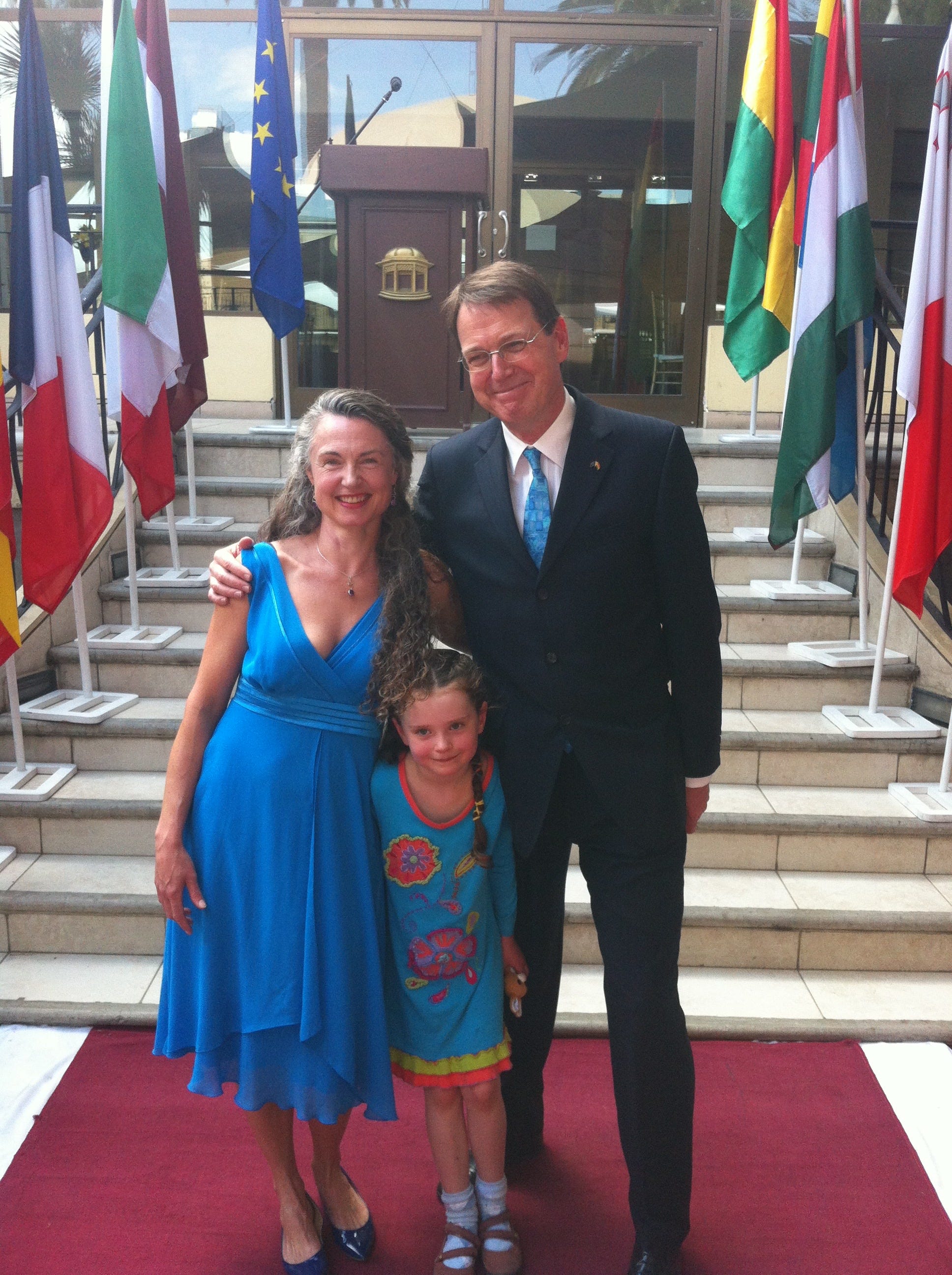
I’m writing this post because for years people have been constantly asking me what an ambassador actually does. People seem to think it’s all glamor and cocktail parties, which is far from the case. Also, I get fed up with the US’s habit of making political appointments. The US apparently thinks that it can anoint any clown an ambassador and send them off to do a job that is just not possible to do competently without vast experience. (Caveat: the US ambassadors we have personally known have been brilliant and qualified! So, it does sometimes happen).
In the British Foreign Office, political appointments such as those common in the US are relatively rare. Most ambassadors earn their position by putting in decades of work. This is the only possible way they can acquire the near-infinite array of skills that working as a senior diplomat requires.
I thought I’d summon my husband in for a little chat about this, as he’s the local authority on these matters—and because working as an ambassador is one of the most liminal jobs imaginable. Besides, this gives him a break from the neverending task of looking after me and Theo.
Me: Hi Sweetheart! I mean, Tim. Thanks for stopping by my office.
Tim: It’s a rare privilege!
Me: Let’s start with why we have ambassadors and what they do. Why are ambassadors important?
Tim: An ambassador is the most visible representative of a country – in my case the UK – in another country or organization. She or he is appointed by the King to promote Britain’s interests in the country to which s/he is accredited. S/he leads the work of an embassy. The focus of an embassy varies hugely from one country to another: the highest priorities in one country may be irrelevant in another.
In the countries where I served, the issues we worked on included political stability; human rights; trade and investment promotion; climate and the environment; educational reform and co-operation; defence and security; conflict reduction and prevention; sustainable human and social development; counter terrorism; energy; justice and the rule of law; water and irrigation; good governance reform; poverty alleviation; migration, including refugee flows; indigenous people’s issues; science and technology; finance and the economy; cultural exchanges... To mention a few! An embassy also looks after the interests of UK nationals, from expatriates needing a new passport or tourists in distress or trouble with the local authorities.
Me: Wow, that all sounds rather theoretical. Could you give me some examples of what that actually means?
Tim: So, in Chile, for example, the economy was booming and there were lots of great opportunities for British firms and investors to support the economic development of the country. The embassy had a big commercial section promoting Chilean markets to UK companies and helping individual British businesses who were looking for export markets or partnerships. From financial services to mining; education to agriculture and fisheries.
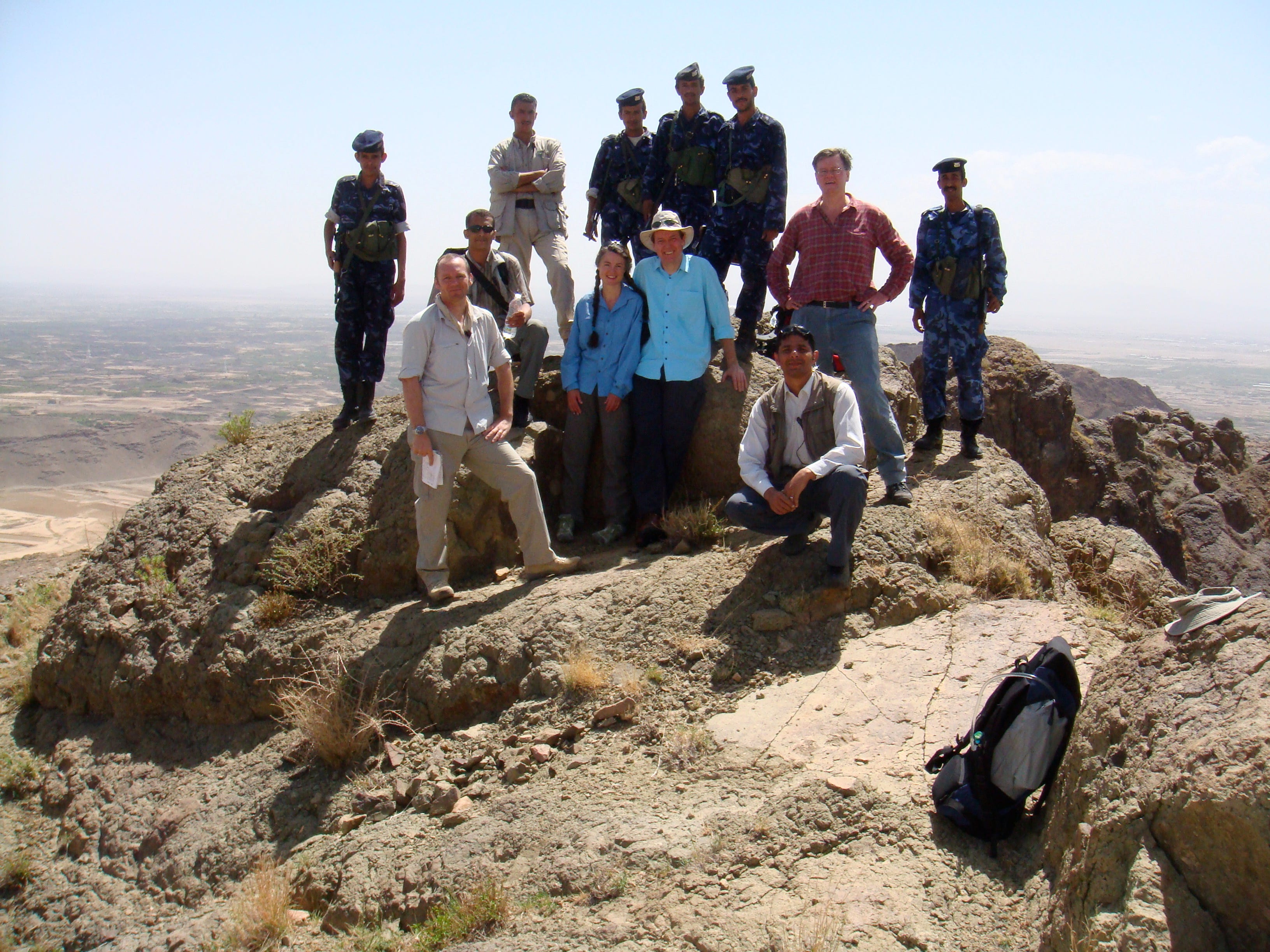
In Yemen, we had a big co-operation programme working on social, economic and political reform. Alongside, we supported a Yemeni government that was increasingly committed to tackling a powerful and active al-Qaeda faction (AQAP – al Qaeda in the Arabian Peninsula) which represented a real threat to the Yemeni state and to international interests. We helped Yemen set up an effective coast guard service, which was successful in combatting arms and people trafficking, smuggling, and piracy. We must have been having some impact, as AQAP suicide-bombed me to try to undermine what we were doing.
Me: Yes, I have vivid memories of the day you were attacked.
Tim: In Bolivia, where I was the EU ambassador, the EU was the Bolivian government’s closest partner in work to reduce the production of coca leaf for illegal purposes and to tackle production and trafficking of cocaine. We also invested considerable time and money to help Bolivia to reform its creaky, corrupt judicial system. We also provided significant funding for the national parks service (over 30% of Bolivia's land area is designated as terrestrial protected areas). The park ranger service would have collapsed without EU funding.
In Uzbekistan, we worked alongside other international partners to maintain Uzbek neutrality following Russia’s attempt to invade Ukraine. We lobbied to persuade the Uzbeks to support the international coalition supporting Ukraine, knowing they were unlikely to do so given their historic and deep-rooted relationship with Russia. Millions of Uzbeks work in Russia, and trade, defense, and security links are still very strong. We worked to support Uzbek ambitions to diversify their relationships away from Russia, acknowledging that they were unlikely ever to cut their ties completely. We also needed Uzbek help following the Taliban takeover in Afghanistan. We had a constructive and productive relationship with the Uzbek government over security and economic development in Afghanistan following the Taliban takeover.
We and the US embassy, working with the United Nations in country, were the most forthright public advocates on human rights issues, particularly media freedom and women’s rights.
Me: Those tasks require quite a broad range of skills. What skills do you feel are essential for an ambassador to possess?
Tim: First, curiosity and a genuine interest in people and the diversity of cultures, systems, and ways of life. You have to enjoy living and working in different and sometimes difficult places.
Second, strong communication skills, most importantly the ability to listen and to reflect on others’ ideas, interests, and approaches. Obviously also to communicate in an articulate and convincing way the perspectives of your own country. An embassy, as we’ve discussed, covers a vast array of areas of work. Whilst an ambassador needs to have a reasonable knowledge of all those areas, sh/e also must have the leadership abilities to get the most out of the most expert members of her team, who are actually working full time on those issues. S/he must have excellent strategic and analytical skills, to get under the surface of the country they are working in and assess how best to achieve UK interests, including over a longer term.
An ambassador must be comfortable dealing with those at the most senior levels of government and business. The president and vice president of Bolivia several times came to lunch and dinner at our house. I spent large amounts of time in the company of government ministers – foreign affairs, finance, defense, environment, interior, justice, water, trade and investment, planning and so on.
I have had to seek to influence host government policy – on issues as varied as aviation emissions, votes at the United Nations, and freedom of expression. In Bolivia I lobbied for the opening up humanitarian access for international NGOs following disastrous flooding.
I needed to be able to master an issue quickly and speak about it confidently and articulately. I needed to understand a subject in sufficient depth to be able to convey succinctly and convincingly what we were asking for or advocating, to deal with questions, and to rebut counter-arguments.
Dealing with media was a big part of the job. Each of my ambassadorial jobs required being at ease responding to the probing of local and international journalists. And, increasingly, using social media to inform and influence.
Me: What about languages?
Tim: This flows on from the importance of communication. You need to speak to a vast array of people from presidents and prime ministers to poor and vulnerable people who are the main recipients of development support. In all of the countries where I worked, that involved a strong, working knowledge of a language.
In Yemen, there were almost no good translators and I almost never used interpreters, relying on my own Arabic even for important conversations with ministers. The president had the only good translator in town, but got really bored if he had to wait while his own interpreter was translating his lengthy perorations. I have been in meetings where an impatient President Saleh started reading the newspaper or turned on the television. So in my regular one-on-one meetings with the president I always tried to stick to Arabic.
In Bolivia, I gave innumerable impromptu and not so impromptu speeches in Spanish and could not have managed without a good command of the language for the even more numerous field visits to EU-funded projects. All of our meetings with Evo Morales were entirely in Spanish; there was no interpretation. You were expected to be fluent. I also ran the EU delegation in Spanish.
I made a speech in Maori to 5,000 people on the banks of the Waikato river at the Maori Queen’s marae (meeting house) in New Zealand.
What are your views on US-style political appointments of completely unqualified people? (Editor’s note: This question betrays a bias in the author).
Political appointees have their place. That’s particularly true in countries where the direct political links between governments are very strong. But generally, I like the UK’s approach. We have almost no political appointees. We believe strongly that career diplomats bring a breadth of knowledge and experience, including regional expertise and linguistic skills, which equip us well to handle the broad range of challenges faced by a diplomat.
Me: What about cocktail parties and fancy dinners?
Tim: They do exist, of course, but what people tend to forget is that there is always a purpose behind them. For example, the goal of the dinner party we had in Tashkent with Uzbek human rights activists was to find out what they saw as their biggest human rights issues, and which human rights issues they might want our help with.
Me: Thank you. It’s such a delight not to talk about cancer this week.
Tim: A pleasure. It’s a delight not to be unpacking boxes.
More questions? I am leaving the comments open to everyone this week, so you can send questions for Tim!
Fascinating! Thank you Jennifer and Tim.
Modest, multi-lingual, thoughtful, deeply informed, non-partisan—why would the US want ambassadors like that?!